
Saints, Spirits and Shamans
Christian Influences in Siberian Shamanic Traditions

An article from Sacred Hoop Issue 132
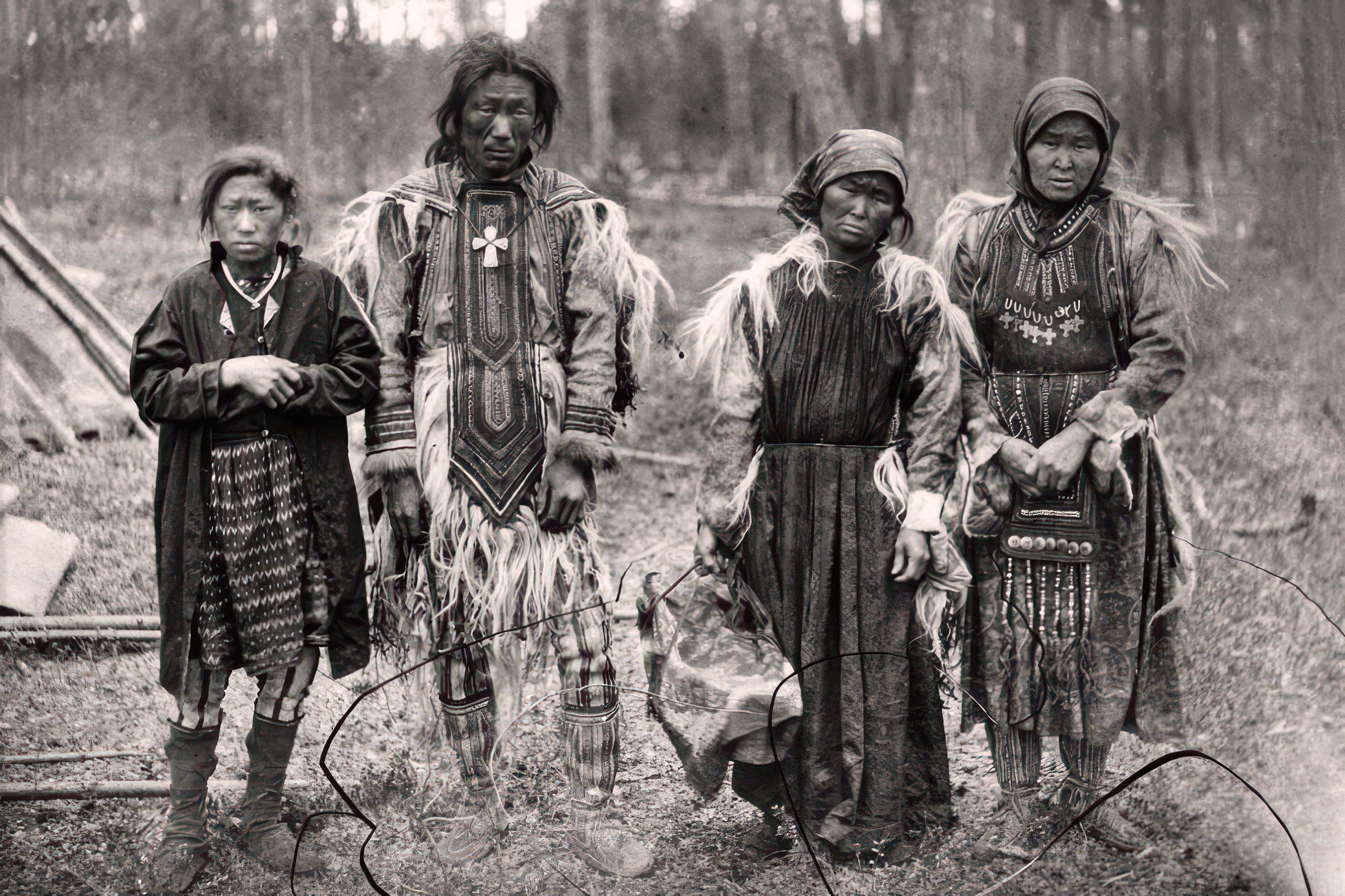
[Evenk shaman wearing a cross]
Tibetan Buddhism spread North out of Tibet and influenced Chinese and Mongolian shamanism a great deal. Many of the spirits of Buddhism - already part of traditional Nepali shamanism - travelled North to Mongolia and Northern China with Buddhism, and became incorporated into the spirit ‘families’ of the shamans in those places; and in Mongolia a new form of shamanism - called ‘Yellow Shamanism’ - arose, which was a direct merging of shamanism and Buddhism.
But what about Christianity? How did Christianity affect and merge with Siberian shamanism?
In South and Central America, as well as in many other places across the globe, Christianity has merged with indigenous spiritual traditions to form a synergy.
The same thing happened in early Europe too of course - pagan spirits - such as Brigid, goddess of the hearth, who became Saint Brigid, and Saint Denis of Paris, who is sometimes associated with the ancient Greek god Dionysus - are echoes of our pagan past.
All religions steal, and all religions change and absorb things over time; Isis and baby Horus becoming Mary and baby Jesus, and just look at Islam, where the mystical path Sufism, with its roots in Central Asia, was far older than the Islam that later absorbed it. It could be argued that there is no such thing as a ‘pure’ sacred path.
In Siberia, the ancient land of shamans, Christianity entered - sometimes gently, but often coercively - from around the C16th onward. It arrived due to the expansion of Russian trade, with expeditions and explorers seeking furs and other resources.
These traders were Orthodox Christians, who made contact with the indigenous peoples of Siberia, especially the Evenk, Yakut, Buryat Mongols, Nenets, and Chukchi.
After - or sometimes alongside - the traders came administrators and missionaries, the later carring their icons, their ritual liturgy, and their doctrines, bringing them to peoples who already had a rich shamanic cosmology and ritual practice.
THE RUSSIAN ORTHODOX CHURCH
It is important to understand that Orthodox Christianity itself has semi-magical features that helped its merging with shamanism.
There is a strong tradition of saints with specific powers or areas of responsibility, and an emphasis on miracle-working, especially in regards to the magical nature of icons. The Orthodox Christian worldview acknowledges spiritual forces and intermediaries at play in the material world, and to a Siberian shaman, these elements would not have appeared alien, just different.
One of the main ways that Christianity came to Siberia was through a group called the Old Believers, who emerged after a major rupture in Russian religious life in the C17th.
In the 1650s–60s, the Church introduced reforms to Russian Orthodox practice, including changing the way a person’s fingers were used to make the sign of the cross, altering liturgical texts, and adjusting other ritual details.
Many Orthodox believers rejected these changes, insisting the older forms were the true faith, and they became known as the Old Believers. After the schism they were persecuted by the state, and marginalised, and as a response, many fled to rural areas of Russia, some even going to Alaska. They set up many communities across Siberia, and it is these groups the shamans often met.
The Old Believers were not just deeply conservative Orthodox Christians, they believed in ritual intensity and had a deep reverence for icons, combining these with a strong sense of spiritual warfare, and a belief in unseen spirit forces.
These ritual emphasis made the integration of the Old Believer’s form of Christianity easier for the shamans to take on board.
The conversion of the local people was uneven however. In some areas of Siberia, and with some cultural groups, baptism became quite widespread. This was sometimes voluntary, sometimes incentivised - ‘we will give you these trade goods if you become baptised’ - and sometimes enforced.
Missionaries did however often seek to suppress shamanic practices, and in some regions, they succeeded in weakening or fragmenting them. Shamans were sometimes persecuted, and traditional rituals discouraged or banned.
But there was resistance, and conversion to Christianity did not necessarily mean the. abandonment of the older shamanic traditions - just as it didn’t in the Americas - so instead, many indigenous communities developed layered systems of belief.
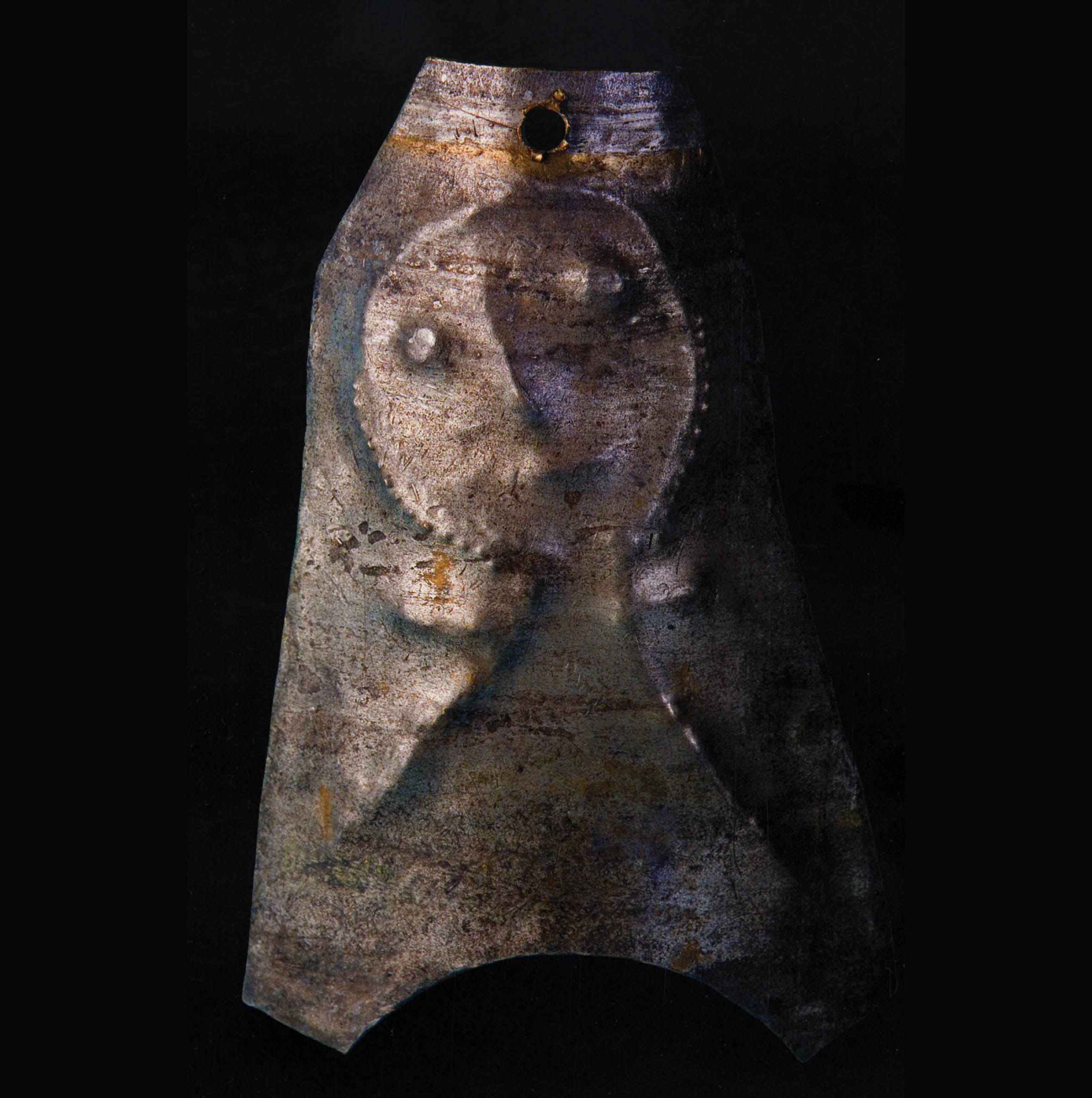
[Evenk shaman’s metal spirit figure of Jesus]
